The Valley of the Saints
https://www.brittanytourism.com/destinations/the-10-destinations/heart-of-brittany-kalon-breizh/the-valley-of-the-saints/

Rhydian takes his place in Valley of the Saints
https://swanseaandbrecon.churchinwales.org.uk/en/news/rhydian-takes-his-place-valley-saints/
A Visit to the Valley of the saints by David Pope, June 2023
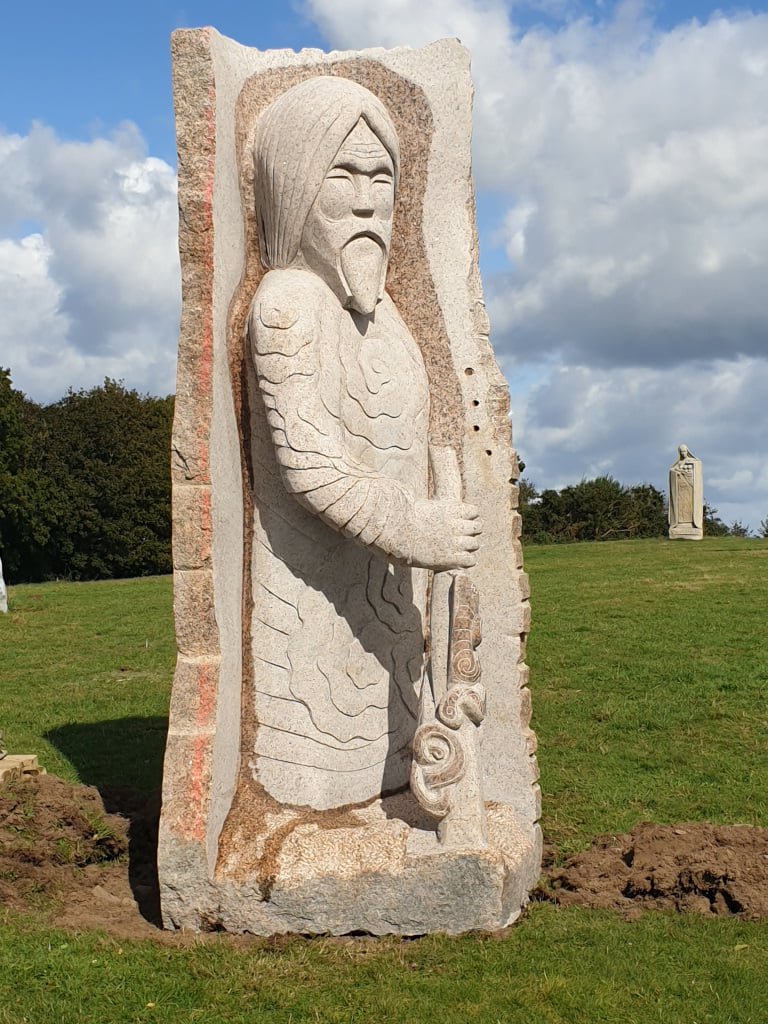
You will probably have heard of some Christians being described as spiritual giants, but I recently came face to face with a very solid physical giant – a twelve-foot, seven-ton granite sculpture of Saint Rhidian, in Brittany’s Valley of the Saints.
In the 5th and 6 th centuries, when the sea was the equivalent of today’s motorways, the Celtic saints travelled freely between Ireland, Wales, Cornwall and Brittany, and they are remembered today in the dedication of many of the Gower churches: Illtyd, Cadoc or Cattwg, Madoc, Cenydd, Teilo, Rhidian and David/Dewi. Many of these saints, including Illtyd, were trained at the abbey of Llancarfan near Cowbridge, under the tutelage of Cadoc, and went on to evangelise Cornwall and Brittany.
Inevitably, over the centuries that have passed, the stories of the lives of these saints have been laced with a fair degree of creative imagination, but there is no doubt that they played an enormous role in taking Christianity to the people of Brittany.
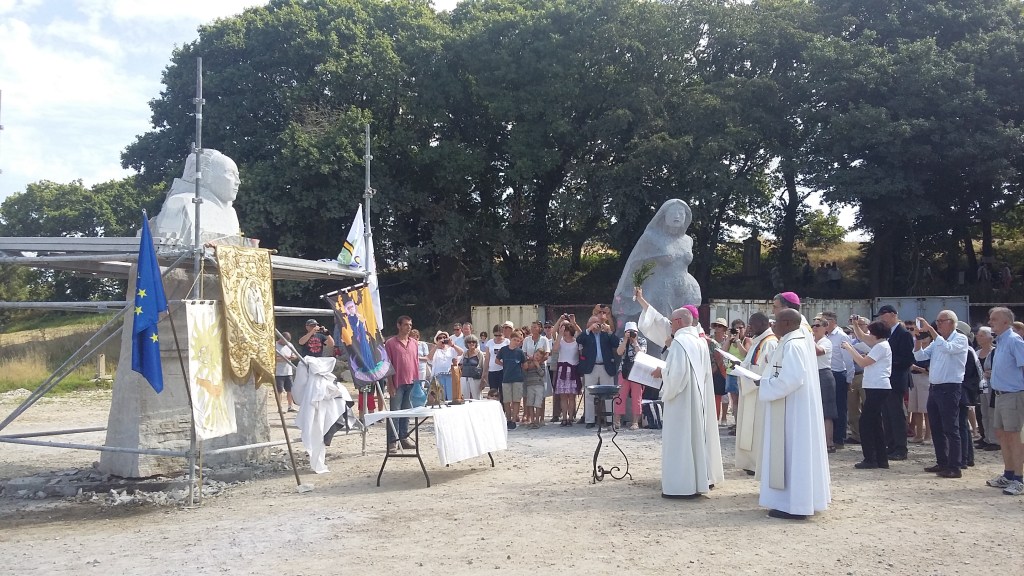
In 2008, a Philosophy professor and a young bank employee in Brittany together formed an association to commemorate the heritage of these Celtic saints, said to number 1,000 in total, by creating the Valley of the Saints, a sculpture park in the middle of Brittany. This modern-day Easter Island, in Carnoët, near the town of Carhaix-Plouguer, would also provide work for sculptors and economic benefits to a rural area far away from the coastal tourist sites.
The first sculpture to be completed, in the following year, was of Saint Malo, who came from Wales, and after whom the famous Breton coastal town is named. By the end of 2022, 169 of these giant sculptures had been completed, each carved on-site from a single piece of Breton granite by a skilled craftsman. The sculptors include a Welshman, Paul Kincaid, who created the statue of Saint David/Dewi, which includes in Welsh the famous saying that is attributed to David, encouraging us to ‘do the little things
The Valley of the Saints is now said to be the second most visited tourist attraction in Brittany, having received nearly 3,000,000 visitors since its creation, but it is not well-known outside of France. There are already sculptures of Rhidian, Cadoc, Teilo, David and Eneour (Gwynour) in place, and plans for Illtyd are in progress.
Saint Rhidian, as in Llanrhidian, became the bishop of Yaudet in Brittany in 531AD, and several sites in Brittany are named after him.

Yves Le Therisien, who is the Bishop’s Assistant and Director of the Diocesan Spiritual Centre in the diocese of Quimper and Léon, had researched the meaning of his family name, and discovered that it came from Saint Therezien, the Breton name for Saint Rhidian. Yves visited Llanrhidian in 2016, and his family commissioned the sculpture of Rhidian/Therezien, which was completed in 2020. The back of the sculpture shows a dragon, symbolising the Welsh origin of the saint.
Anne and I travelled to Brittany on holiday in May, and I was privileged to meet with Yves and his wife Viviane at the Valley of the Saints, where they took me on a tour of this amazing site, with the names of saints that are so familiar to us in Wales. Unfortunately, Anne was unwell on that day, but we were able to return for a visit together a few days later.
Details of the Saint Rhidian sculpture, and also a video created by Yves with English subtitles, can be found elsewhere on this page. If you are ever in Brittany, the Valley of the Saints is well worth a visit. For further information, Click HERE
In future articles, I hope to write about some of the other Celtic saints who are know to us in Gower, and who also feature in the Valley of the Saints. If this has whetted your appetite, I will also be posting photos in the Gower Pilgrimage Way Facebook group.
A video presentation (in French)
 Gower Ministry Area